Name and Origins
The Grey Company is less the name of a people than of a single riding drawn from one. The phrase is first heard in the message from Galadriel that Gandalf carries to Aragorn in Fangorn. There, in verse, she asks where the Dúnedain have gone and why his kinsmen wander so far, and she foretells that the Grey Company will ride from the North. Nothing in the text shows that the riders chose this name for themselves. It reaches the reader as a word of foresight, and the narrative afterwards adopts it for the band that comes south. When the riders do appear, the name matches their look: they are cloaked alike in dark grey, and each cloak is held at the shoulder by a silver brooch in the form of a star with rays.1
Behind the grey cloaks stand the Dúnedain of the North, whose Sindarin name marks them as Men of the West, descendants of the Númenóreans who came to Middle-earth. Their line runs back to the realm of Arnor, founded by Elendil and held by the heirs of Isildur. That realm was later divided, and its northern successor, Arthedain, eventually fell. The survivors did not found a new kingdom. They became a scattered, wandering people under a line of Chieftains, and the heirs of that line were fostered in Rivendell. Aragorn is the Chieftain of his time, so a summons in his name is a summons from their own lord.2
Outsiders knew them by another name. In Bree and the lands around it they were called Rangers: grim men of the wild, seen coming and going on errands no one explained, and regarded with some unease. The unease reflected how little was known of them rather than anything they did, since their long watch over the borders went largely unthanked. The Grey Company is thus a small part of this hidden people, briefly seen by others for what it was. It was also not made up only of Dúnedain, since the two sons of Elrond rode with it, bound to Aragorn's house by long friendship rather than by blood.3
- 1The Lord of the Rings, Book III, ch. 5, The White Rider; The Lord of the Rings, Book V, ch. 2, The Passing of the Grey Company
- 2The Lord of the Rings, Appendix A, I, iii, Eriador, Arnor, and the Heirs of Isildur
- 3The Lord of the Rings, Book I, ch. 9, At the Sign of the Prancing Pony; The Lord of the Rings, Book V, ch. 2, The Passing of the Grey Company
History
The Company's history begins in Rivendell, where word came that Aragorn needed his kinsmen and that they should ride to him in Rohan. The Rangers who answered were gathered in haste and set out southward, joined by the sons of Elrond. They overtook Théoden's company by night, on its ride back from Isengard, and at first alarmed the Riders, who took them for enemies coming up behind. Halbarad hailed them and asked for Aragorn. The meeting was a reunion rather than a first encounter. Aragorn greeted Halbarad warmly as a kinsman he had not expected to see so far from home.1
The riders brought more than their own swords. Halbarad carried a long staff wrapped close in black cloth, a gift that Arwen had made for Aragorn, together with her word that the time was short and he should wait for his hope no longer. Elladan passed on a message from Elrond, who reminded Aragorn of the Paths of the Dead if he found himself pressed for time. After Aragorn had tested his will against Sauron through the Orthanc-stone at the Hornburg, he chose that road. From then on the Company's course separated from that of the Rohirrim. Legolas and Gimli went with Aragorn, while Merry stayed in the service of Théoden.2
The Company moved quickly. It crossed the plain to Edoras and climbed the valley to Dunharrow, and there Éowyn asked to ride with them and was refused. In the morning they passed through the Dark Door beneath the Dwimorberg. Most of the horses followed only because they were led, and the living felt the Dead gather at their backs in the darkness under the mountain. They came out at the head of the vale of the Morthond and rode on to the Stone of Erech, which they reached at midnight. There Aragorn called on the Oathbreakers to fulfil their oath, and Halbarad unfurled the standard. In that darkness no device could be seen on it.3
The later stages of the journey are told afterwards, by Legolas and Gimli, among the lords in Minas Tirith. The Company rode south and east through Lamedon with the host of the Dead behind it, and wherever the Dead came the enemy's allies fled. At Pelargir on the Anduin the Corsairs of Umbar were driven in terror from their ships. Aragorn then released the Dead from their oath and took the fleet for his own purposes. He manned it with the men of the southern fiefs who had rallied to him, and sailed north up the river towards the besieged city.4
The ships came to the Harlond during the Battle of the Pelennor Fields. The standard was broken out on the leading vessel, and it showed the emblems of Elendil's house, so that friend and foe alike knew whose banner it was. The Company fought on the field that day, and Halbarad fell there. What was left of the band stayed with Aragorn afterwards. The Dúnedain and the sons of Elrond were in the host of the West that marched on the Black Gate. After that the name no longer appears as that of a separate company. Its purpose had been to bring Aragorn his kin in time of need, and it was absorbed into the larger war that it had helped to decide.5
- 1The Lord of the Rings, Book V, ch. 2, The Passing of the Grey Company
- 2The Lord of the Rings, Book V, ch. 2, The Passing of the Grey Company
- 3The Lord of the Rings, Book V, ch. 2, The Passing of the Grey Company
- 4The Lord of the Rings, Book V, ch. 9, The Last Debate
- 5The Lord of the Rings, Book V, ch. 6, The Battle of the Pelennor Fields; The Lord of the Rings, Book V, ch. 10, The Black Gate Opens
Ways and Customs
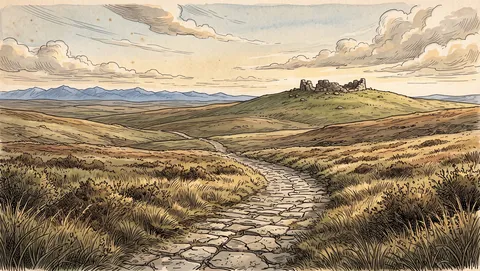
The riders who came south lived the ordinary life of the northern Dúnedain, and it was a life shaped by vigilance rather than settlement. At the Council of Elrond, Aragorn describes his people as wanderers who kept the wild lands of Eriador clear of the creatures that would otherwise have troubled the quiet countries, and who took no thanks for it. Their secrecy was a choice. As Aragorn put it, folk who live free of fear stay simple and untroubled, and that condition could only be kept if the watchers stayed out of sight. The skills that mattered to such a people were those of the wilderness: long journeys, hard riding, and the hunting of enemies. Boromir's scorn at the Council and Aragorn's measured reply show how little of this was known even to their southern kin.1
Their closest bonds outside their own kindred ran to Rivendell. The Appendices tell how the sons of Elrond often rode with the Rangers against Orcs, and how Aragorn's father Arathorn was killed on one such ride in their company, struck in the eye by an Orc's arrow. The brothers' hostility to Orcs had its own origin. Their mother Celebrían had been captured and tormented by Orcs, and afterwards she could find no healing in Middle-earth and passed over the Sea. Rivendell also held what the Dúnedain kept of their past. The heirlooms of Isildur's line were preserved in Elrond's house, and the young heir was raised there under another name so that his lineage would remain hidden. When the twins rode south, then, they came as long-standing companions in the same wars as the Rangers, not as foreign allies.2
Descent from Númenor gave the Dúnedain longer lives than most Men, although the Appendices present that gift as waning over the generations and not as something they could count on. What they held more firmly was continuity: a line of Chieftains unbroken since the fall of the northern kingdom, and claims and obligations that outlasted the lives of those who first made them. This is why the Company's road passed beneath the mountain. The Dead there were bound by an oath sworn to Isildur, and only an heir of his line could call it due, however many lives of Men had passed since. The ride was therefore in keeping with the habits of a people who had long served duties that most of the world had forgotten.3
- 1The Lord of the Rings, Book II, ch. 2
- 2The Lord of the Rings, Appendix A, I (iii), Eriador, Arnor, and the Heirs of Isildur; The Lord of the Rings, Appendix A, I (v), Here follows a part of the Tale of Aragorn and Arwen
- 3The Lord of the Rings, Appendix A, I (i), Númenor; The Lord of the Rings, Book V, ch. 2, The Passing of the Grey Company
Kindreds and Houses
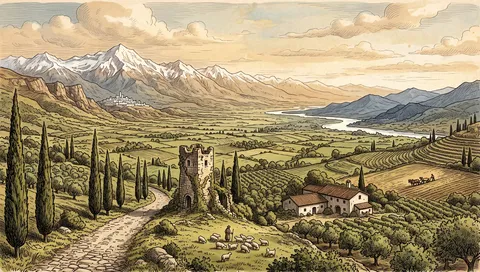
The text divides the riders who came south into only two groups: the Rangers whom Halbarad led, and the two sons of Elrond who rode with them. The Rangers belong to a single kindred, the northern branch of the Dúnedain. The Appendices set this branch apart from their kin in Gondor, since it descends from Isildur's line in the North and not from the house of Anárion that ruled the South. Within this northern kindred the narrative names no separate houses, clans or family lines. Every Ranger is simply a kinsman of Aragorn in the broad sense that the whole people shares one descent. Above them stands the line of the Chieftains, which the Appendices trace from Aranarth, son of the last king of Arthedain, down to Aragorn himself. Halbarad is given no father and no house of his own. He appears only as the leader of the band and as a kinsman whom Aragorn trusts closely.1
Elladan and Elrohir come from another house altogether. They are the children of Elrond and Celebrían, and through their mother they are grandsons of Celeborn and Galadriel. That family link sheds some light on how word of the Company first passed through Lórien. Their descent from Elrond places them among the Half-elven, whose line joins Men, Elves and a Maia. A connection to Aragorn exists, but it is ancient: Elrond's brother Elros became the first King of Númenor, and the Dúnedain descend from him. Across so many generations, however, that tie of blood counts for less than the friendship that brought the brothers south.2
Two more companions of other peoples shared the road without belonging to the Company by kin. Legolas was the son of Thranduil, king of the Elves of northern Mirkwood, and Gimli was the son of Glóin of Durin's folk. The narrative always names them separately as Aragorn's friends from the Fellowship, not as members of the northern riding.3
- 1The Lord of the Rings, Book V, ch. 2; The Lord of the Rings, Appendix A, I (iii), Eriador, Arnor, and the Heirs of Isildur
- 2The Lord of the Rings, Appendix A, I (i), Númenor; The Lord of the Rings, Appendix A, I (v), Here follows a part of the Tale of Aragorn and Arwen
- 3The Lord of the Rings, Book II, ch. 2; The Lord of the Rings, Book V, ch. 2
Role in the Story
In the narrative the Grey Company works as a hinge. Before its arrival Aragorn is a leader without a people, a stranger among Elves, Rohirrim and Hobbits whose claim rests on his word and his sword. The riders from the North give that claim a visible body. They show that a hidden kingdom has persisted behind the Ranger of Bree. Their coming also fulfils a foretelling the reader has already heard, so it confirms that the events of the war are being guided toward an end that others foresaw. From this point Aragorn is no longer only one of the companions. He acts as the heir who gathers what belongs to him.1
The telling itself keeps the Company at a distance. Their arrival and departure are seen largely through Merry, who is left behind and feels the parting as a loss he does not fully understand. Under the mountain the account shifts toward Gimli's dread, and after Erech the band vanishes from direct view. The reader meets it again only through people who do not know what they are seeing. The defenders of the city at first read the approaching fleet as a new blow from the enemy. The full road is told afterwards, in retrospect. This indirection keeps the Company as hidden to the reader as the Rangers had been to the world, and it makes its reappearance a disclosure as well as a rescue.2
The book sets the Company's ride beside the slower muster of Rohan, and the contrast is instructive. The Rohirrim are a whole nation moving to war under their king. The Company is a small band whose strength lies in lineage, endurance and an old obligation it alone can call due. It stands for the idea, recurrent in the book, that decisive help may come from those long overlooked. The movement from grey cloaks to an unfurled royal standard traces in small the book's larger pattern of concealment giving way to recognition.3
- 1The Lord of the Rings, Book V, ch. 2, The Passing of the Grey Company
- 2The Lord of the Rings, Book V, ch. 2, The Passing of the Grey Company; The Lord of the Rings, Book V, ch. 6, The Battle of the Pelennor Fields; The Lord of the Rings, Book V, ch. 9, The Last Debate
- 3The Lord of the Rings, Book V, ch. 2, The Passing of the Grey Company; The Lord of the Rings, Book V, ch. 3, The Muster of Rohan
Adaptations
Peter Jackson's film trilogy, released 2001–2003, leaves the Grey Company out entirely, and this is one of the more consequential departures in its final part. Halbarad and the Rangers of the North do not appear, and neither do Elladan and Elrohir, so no band of kinsmen overtakes Théoden's host after Isengard. The tasks the book gives to the Company's arrival are handed to Elrond, who travels to the Rohirrim's encampment himself. He brings Aragorn the reforged sword of his line and urges him towards the Paths of the Dead. The film thus drops the standard made by Arwen that Halbarad carries in the book and puts the heirloom blade in its place. Aragorn goes under the mountain with only Legolas and Gimli beside him. Without the riders from the North, the film also loses the sense of a hidden people standing behind the Ranger that the book establishes at this point. The film departs from the book again after the passage through the mountain. The host of the Dead is not released after the capture of the fleet but comes to the Pelennor and fights there, which removes the book's picture of living allies rallying to the heir on his road north.1
The older animated film leaves the Company out for a reason of scope rather than by choice. Ralph Bakshi's 1978 adaptation breaks off with the battle at Helm's Deep, and in the book the riders from the North only reach Théoden's company after the ride to Isengard. The episode therefore falls outside the part of the story that the film tells. The second film that was planned to complete it was never made, so the Grey Company has no counterpart in Bakshi's version.2
 War of the Ring